Drone Inspection Services
Planned inspection programme
The same route round a site or a portfolio, flown to a schedule, so this year's photographs sit next to last year's and you can see what has moved.
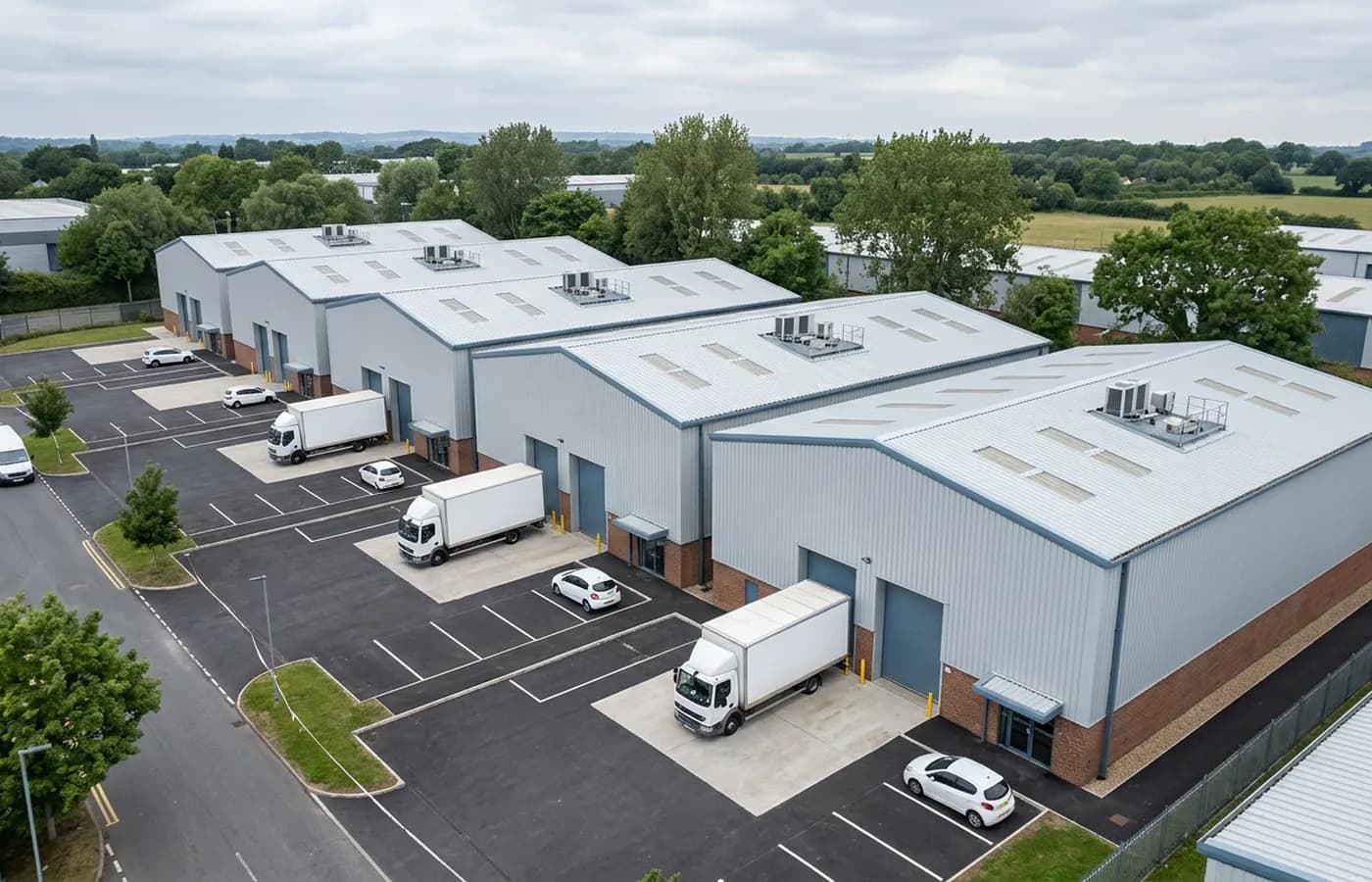
A one off inspection tells you the state of a building on one day. A programme tells you the direction it is travelling in, which is the thing a maintenance budget actually needs. The same assets get recorded in the same order, from broadly the same positions, at an agreed interval: annually for most portfolios, twice a year where a roof is already on a watch list.
The value is in the comparison. A silted box gutter photographed once is a job to price. The same gutter photographed three years running, silting up faster each time, is a drainage problem somewhere upstream and a very different conversation with the tenant.
The schedule is set to suit the property rather than the diary. Autumn visits catch gutters before the leaf fall that blocks them; spring visits catch what the winter did. Where a site has a service charge year, the programme is usually pinned to it so the report lands before the budget is set.
What is included
- An agreed asset list, so both sides know exactly what is covered
- A fixed inspection route, repeated visit to visit
- Dated photographs of every asset on the list
- A written report per asset within 48 hours
- A comparison note against the previous visit from the second year on
- Method statement and risk assessment supplied before each visit
- One combined price for the site or the portfolio, agreed up front
Why the same route matters more than the best route
A drone can be flown anywhere around a building, which is exactly the problem. Two inspections flown from different positions in different light produce two sets of photographs that cannot be compared, and comparison is the entire point of a programme.
So the route is fixed at the start and left alone. The same standoff distances, the same order, the same coverage. It occasionally means a slightly less flattering angle on one elevation than a free hand would choose. That is a good trade, because next year the same angle is there again.
Where something new appears on site, a new extension, a plant replacement, a mast, it gets added to the list as its own item rather than folded into an existing one, so the history of the original asset stays clean.
What a programme is not
It is not a substitute for a condition survey by a chartered building surveyor, and it does not carry a professional opinion on structure or valuation. It is a photographic record of what can be seen from the air, taken to a repeatable standard, with plain notes on what was found.
In practice it is the thing a surveyor, a roofing contractor or an insurer then works from. Several clients send the report straight on to whoever is going to price the work, because it saves that contractor a wasted trip to look at something they could have seen in a photograph.
On the day
How a planned programme runs
- Step 1
Agree the asset list
We walk the site plan with you and write down what is in scope: which roofs, which elevations, the plant, the towers, the tank compound. Anything excluded is written down as excluded.
- Step 2
Fix the route and the interval
The order the assets get recorded in, the positions the aircraft flies from and how often the visit repeats. Once set, it stays set, because that is what makes the photographs comparable.
- Step 3
Fly the visit
A short cordon at the take off point, the route flown, and the site handed back. Occupied units carry on working underneath throughout.
- Step 4
Report and compare
A report per asset inside 48 hours, and from the second visit onward a note of what has changed since last time, with the two photographs side by side.
Behind the work
Kit, cover and qualifications
CAA registered
A registered operator with an Operator ID and a Flyer ID held, which is the baseline any commercial client should be asking for and the first thing to check on a quote.
A2 Certificate of Competency
The A2 CofC, not a GVC. That decides how close the aircraft may legally be flown to people and property, so it decides what can be inspected and how, and it is set out plainly rather than buried.
Insured with Coverdrone
Commercial cover through Coverdrone. A certificate can be sent across for a site file or a contractor approval pack before the visit is booked.
Report within 48 hours
Photographs and a written report per asset within 48 hours of the flight, so the file is closed while the visit is still fresh in everyone's mind.
Planned programme
Planned inspection programme questions
- How many sites make a programme worth doing?
- One will do if it is a big enough site with several buildings on it. It works better across a portfolio, because sites within a sensible run of each other can share a day, and that is taken into account when the price is agreed.
- Do we have to commit for years?
- No. Each visit is priced and booked on its own. The schedule is an intention rather than a contract, and plenty of clients start with a single year and decide afterwards.
- Who holds the photographs?
- You do. The report and the images are yours to circulate, put in a site file, or hand to a contractor. A copy is kept so the next visit can be compared against it, and that copy can be deleted on request.
Where
Planned inspection programme across the South West
Also on this site
See how a visit runs
Request a site quote with Drone Inspection Services
Tell us the site and the assets you need covered. Sam Hembury will come back with a fixed price, a method statement and a date.